
The first time I tried Gochujang Eggplant, I was captivated by how such a simple dish could ignite my taste buds with vibrant flavors. As the rich scent of sautéed garlic and ginger filled my kitchen, I knew a delightful meal was in the making. This recipe transforms humble eggplant into a stunning centerpiece, all thanks to the bold kick from Korean Gochujang sauce.
With a perfect balance of spicy and slightly sweet elements, this vegan and gluten-free option is not only quick to whip up in under 30 minutes but also impresses anyone who tries it. Whether you’re tired of fast food or just seeking something vibrant for dinner, this Gochujang Eggplant will make your meal memorable. Let’s dive into the easy preparation of this sensational dish that can turn any weeknight dinner into a culinary adventure!

Why is Gochujang Eggplant a Must-Try?
Simplicity at Its Best: This recipe allows you to enjoy a delicious meal without complicated steps—perfect for even novice cooks.
Explosive Flavor: The mixture of spicy gochujang, savory soy sauce, and sweet maple syrup creates an unforgettable taste experience.
Quick Meal Solution: Ready in just under 30 minutes, it’s the ideal choice for busy weeknights.
Versatile Dish: Serve it as a main course or a side dish alongside your favorite grains or proteins.
Crowd-Pleasing: This vibrant, aromatic dish not only pleases your palate but is also visually stunning—great for impressing guests!
Looking for more quick, tasty options? Check out our other delicious quick vegan recipes to keep your meals exciting!
Gochujang Eggplant Ingredients
For the Eggplant
• Medium Eggplants – Adds a creamy, melt-in-the-mouth texture when cooked; use two, cut into 1-inch cubes for even cooking.
For the Sauce
• Gochujang (Korean Red Chili Paste) – Provides the dish’s signature spicy and tangy flavor; choose your preferred heat level.
• Soy Sauce – Enhances umami and adds depth; can substitute with tamari for a gluten-free option.
• Rice Vinegar – Offers a tangy counterbalance to the spice; can be replaced with apple cider vinegar.
• Honey or Maple Syrup – Adds a touch of sweetness; for vegan option, use maple syrup.
• Sesame Oil – Provides a rich, toasted flavor; ensures it’s cold-pressed for best results.
For the Aromatics
• Minced Garlic – Infuses the dish with aromatic notes; fresh is best, but powdered can be a quick alternative.
• Minced Ginger – Brightens the flavor profile; fresh ginger enhances depth.
For Cooking
• Vegetable Oil – For sautéing; any neutral oil works.
• Salt – To taste; important for enhancing all flavors in the dish.
For Garnish
• Chopped Green Onions – Adds freshness and color; reserve some for garnish.
• Sesame Seeds – For garnish and added crunch; can be toasted for extra flavor.
Transform your dining experience with this delightful Gochujang Eggplant recipe!
How to Make Gochujang Eggplant
-
Mix the Sauce: In a small bowl, combine gochujang, soy sauce, rice vinegar, honey or maple syrup, and sesame oil. Stir until well incorporated and set this flavorful mixture aside for later.
-
Sauté Aromatics: Heat vegetable oil in a large skillet or wok over medium-high heat. Once hot, add the minced garlic and ginger, sautéing for about 1 minute or until fragrant—this ignites the flavors beautifully!
-
Cook the Eggplant: Add the cubed eggplant to the skillet, season with salt, and cook while stirring occasionally. Aim for about 8-10 minutes, until the eggplant is tender and slightly browned, creating that delightful melt-in-your-mouth texture.
-
Combine with Sauce: Lower the heat to medium and pour the gochujang sauce over the cooked eggplant. Toss in the chopped green onions, making sure to reserve some for garnishing, and stir to coat evenly.
-
Heat Through: Let the dish cook for an additional 2-3 minutes, allowing the flavors to meld together and everything to heat through. You’re nearly there!
-
Serve Beautifully: Transfer the Gochujang Eggplant to a serving dish and garnish with the reserved green onions and a sprinkle of sesame seeds for that extra crunch and flair.
Optional: Drizzle with a bit of extra sesame oil for added richness.
Exact quantities are listed in the recipe card below.
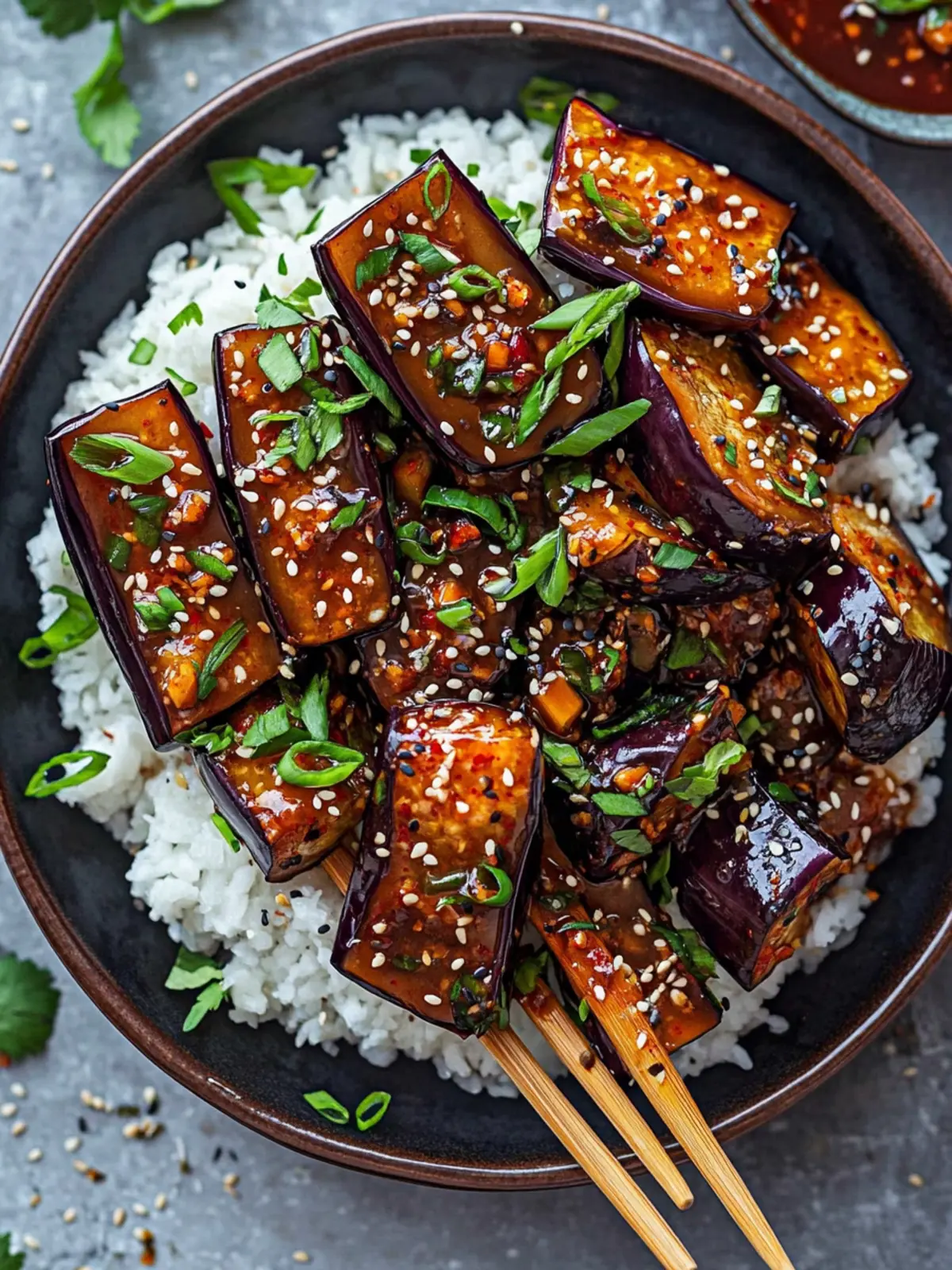
Expert Tips for Gochujang Eggplant
-
Cooking Time: Keep a close eye on the eggplant while it cooks; aim for tender without mushiness. Overcooking can detract from the Gochujang Eggplant’s texture.
-
Gochujang Selection: Pick the right heat level for your palate; starting with mild or medium varieties ensures a delightful experience for everyone.
-
Fresh Ingredients Matter: Use fresh garlic and ginger for the best flavor; they truly elevate the overall taste of the Gochujang Eggplant dish.
-
Garnishing Tip: Don’t skip the sesame seeds and green onions as garnish— they add beautiful color and crunch, making your final dish visually enticing.
-
Flavor Meld: Allow the dish to cool slightly before serving; it helps flavors meld beautifully, enhancing your enjoyment!
Gochujang Eggplant Variations
Feel free to tailor this dish to suit your tastes and pantry staples, ensuring a personalized culinary experience.
-
Spicy Additions: Incorporate fresh chilis or red pepper flakes for an added kick; perfect for heat lovers!
-
Smoky Flavor: Add a teaspoon of smoked paprika or a dash of liquid smoke for a delightful smoky profile that beautifully offsets the heat.
-
Veggie Medley: Mix in bell peppers, zucchini, or snap peas to add color, texture, and additional nutrients—great for making it a more rounded meal.
-
Protein Boost: Toss in some cubed tofu or tempeh when cooking the eggplant; they will soak up the flavors and make this dish heartier.
-
Nutty Twist: Drizzle with tahini or sprinkle with chopped peanuts before serving for a nutty richness that complements the sauce perfectly.
-
Sweet Variations: Swap out the maple syrup for agave syrup or coconut sugar to explore different sweet profiles while keeping it vegan.
-
Herbaceous Touch: Fresh basil or cilantro can add a burst of freshness at the end; just sprinkle them in right before serving.
Playing around with these variations will make your Gochujang Eggplant experience even more delightful!
Make Ahead Options
These Gochujang Eggplant are perfect for busy home cooks looking to save time during the week! You can prepare the flavorful sauce (mixing gochujang, soy sauce, rice vinegar, honey, and sesame oil) up to 24 hours in advance and store it in an airtight container in the refrigerator. The eggplant can also be cut and stored, but it’s best to do this no more than 3-4 hours before cooking to prevent browning. When you’re ready to serve, just sauté the garlic and ginger, add the eggplant, and toss in the prepared sauce for a quick finish. This way, you’ll enjoy a delicious meal without the last-minute rush!
How to Store and Freeze Gochujang Eggplant
Fridge: Store any leftovers in an airtight container for up to 4 days. This ensures the Gochujang Eggplant stays fresh, retaining its delicious flavor.
Freezer: If you want to keep it longer, freeze the dish in a freezer-safe container for up to 3-4 months. Thaw it in the fridge before reheating to maintain texture and taste.
Reheating: For best results, reheat in a skillet over low heat, adding a splash of water or vegetable broth to restore moisture and warmth without overcooking the eggplant.
What to Serve with Gochujang Eggplant?
Elevate your dining experience by pairing this spicy dish with complementary flavors and textures that will delight every palate.
-
Steamed Jasmine Rice: This fragrant rice soaks up the spicy sauce, balancing the dish’s vibrant flavors perfectly.
-
Quinoa Salad: Nutty quinoa adds a wholesome touch, while fresh veggies provide crunch and color. Drizzle with a sesame dressing for added depth!
-
Cucumber Kimchi: The tangy crunch of kimchi offers a refreshing contrast to the warm, spicy eggplant, enhancing your meal’s Korean flair.
-
Sautéed Greens: Lightly sautéed bok choy or spinach adds a nutritious and slightly bitter element that pairs wonderfully with the eggplant’s savory richness.
-
Spicy Tofu Bites: For extra protein, crispy tofu seasoned with a touch of gochujang echoes the dish’s flavor profile, creating a cohesive meal.
-
Chilled Sake: This smooth Japanese rice wine complements spicy dishes beautifully, enhancing the flavors without overpowering them.
Enjoy this delightful symphony of textures and flavors to make your dinner memorable!
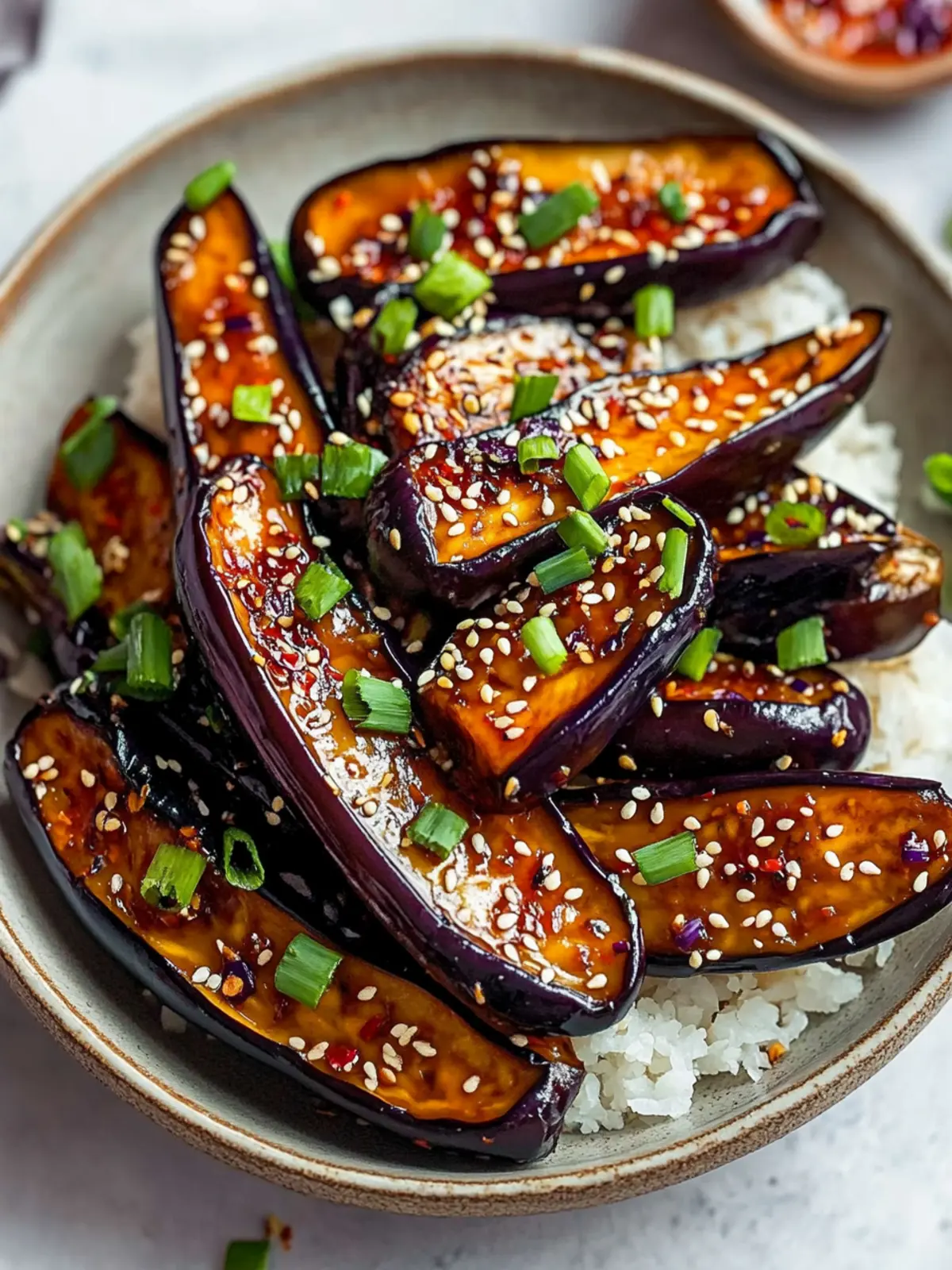
Gochujang Eggplant Recipe FAQs
How do I choose the right eggplant for this recipe?
Absolutely! Look for medium eggplants that are firm, glossy, and free from blemishes or dark spots. A slightly heavy feel usually means it’s fresh and full of flavor. For this recipe, cut them into 1-inch cubes for even cooking.
What’s the best way to store leftovers?
Very! Store any leftover Gochujang Eggplant in an airtight container in the refrigerator. It will stay fresh for about 3 to 4 days. Make sure to cool the dish before sealing it to preserve its texture and flavor.
Can I freeze Gochujang Eggplant?
Absolutely! To freeze Gochujang Eggplant, place it in a freezer-safe container, leaving a little space for expansion. It can last for up to 3-4 months. When you’re ready to enjoy it again, simply thaw it in the refrigerator overnight before reheating.
What if my eggplant turns out too mushy?
No worries! If it becomes mushy, it might be due to overcooking. Always cook eggplant just until tender (about 8-10 minutes) and keep stirring to avoid sticking. If you find it’s still too soft, try adding a splash of soy sauce or vinegar for an extra flavor kick to balance it out.
Is Gochujang Eggplant safe for my allergies?
Yes, but it’s important to check! This recipe is vegan and gluten-free if you use tamari as a soy sauce substitute. However, it’s crucial to ensure that the specific brands of gochujang and soy sauce you choose are free from allergens you might be sensitive to. Always read labels to be sure!
Can I add more vegetables to the Gochujang Eggplant?
The more the merrier! You can definitely toss in other vegetables such as bell peppers, snap peas, or even spinach for added nutrition and color. Just make sure to adjust the cooking time slightly so everything remains tender but not overcooked. Enjoy experimenting!
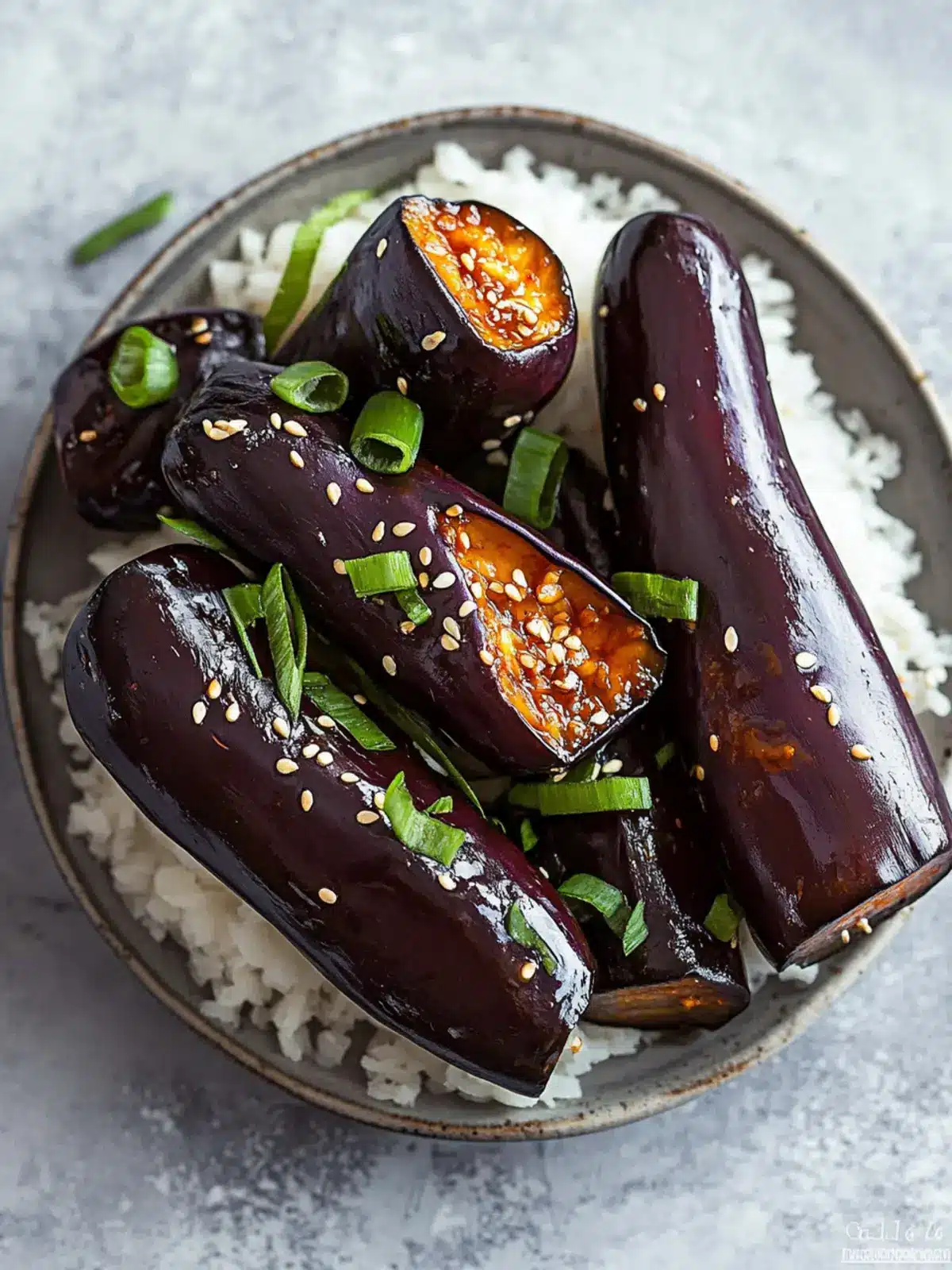
Gochujang Eggplant: Quick Spicy Delight for Your Dinner Table
Ingredients
Equipment
Method
- In a small bowl, combine gochujang, soy sauce, rice vinegar, honey or maple syrup, and sesame oil. Stir until well incorporated and set this flavorful mixture aside for later.
- Heat vegetable oil in a large skillet or wok over medium-high heat. Once hot, add the minced garlic and ginger, sautéing for about 1 minute or until fragrant.
- Add the cubed eggplant to the skillet, season with salt, and cook while stirring occasionally for about 8-10 minutes, until the eggplant is tender and slightly browned.
- Lower the heat to medium and pour the gochujang sauce over the cooked eggplant. Toss in the chopped green onions and stir to coat evenly.
- Let the dish cook for an additional 2-3 minutes, allowing the flavors to meld together and everything to heat through.
- Transfer the Gochujang Eggplant to a serving dish and garnish with the reserved green onions and a sprinkle of sesame seeds.