
When the vibrant colors of fresh vegetables catch my eye at the market, my mind often drifts to a steaming bowl of Thai Peanut Noodle Soup. There’s something comforting about the rich aroma of coconut milk mingling with the zesty kick of red Thai curry paste, making it hard to resist. On those busy weeknights when time slips through my fingers like sand, this recipe has become my go-to hero.
With just 30 minutes from start to finish, this dish transforms simple pantry staples into a warm embrace of flavors. Each spoonful is a delightful mix of creamy broth, tender noodles, and an assortment of colorful veggies, inviting you to indulge without guilt. It’s perfect for both vegetarians and those looking to impress meat-loving friends. Trust me, once you dive into this bowl of comfort, you won’t look back!

Why will you love Thai Peanut Noodle Soup?
Quick Preparation: In just 30 minutes, you can whip up this delicious meal, making it an ideal option for busy weeknights.
Pantry-Friendly: Utilizing common ingredients means you won’t need to make any special trips to the store.
Creamy and Flavorful: The rich coconut milk pairs beautifully with the spicy red Thai curry paste, creating a rich and satisfying broth.
Customizable: Feel free to add your favorite vegetables or proteins, like tofu or chicken, adjusting to your taste preferences.
Vegan & Vegetarian Options: Perfectly suited for plant-based diets while still being hearty enough to satisfy everyone at the dinner table.
Crowd-Pleaser: The inviting flavors and colorful presentation make it a hit with family and friends alike!
Thai Peanut Noodle Soup Ingredients
• Here’s everything you need to create this comforting dish!
For the Soup
• Vegetable Oil – A basic cooking base; can substitute with canola or coconut oil for a hint of flavor.
• Cremini Mushrooms – Adds umami and texture; feel free to swap for shiitake or button mushrooms.
• Kosher Salt – Enhances overall flavor; regular salt can be used according to preference.
• Pad Thai Rice Noodles – The main starch for the soup; any flat rice noodles or gluten-free options work too.
• Garlic – Aromatic base flavor; garlic powder can replace fresh if you’re in a pinch.
• Ginger – Infuses warmth and spice into the broth; substitute with ground ginger in smaller quantities if needed.
• Red Thai Curry Paste – Provides depth and delightful heat; seek out vegan versions to avoid shrimp paste.
• Coconut Milk – The creamy heart of the broth; use light coconut milk for a lower-fat alternative.
• Low-Sodium Soy Sauce – Adds a salty note; tamari works for gluten-free diets.
• Creamy Natural Peanut Butter – Thickens the soup and adds richness; almond or cashew butter can give a different flavor twist.
• Low-Sodium Vegetable Broth – The liquid base for the soup; chicken broth is a fine substitute for non-vegetarians.
• Red Bell Pepper – Brings sweetness and color; any bell pepper or similar vegetable can stand in.
• Fresh Lime Juice – Brightens flavors beautifully; lemon juice is a suitable replacement.
• Cilantro Sprigs – Adds a fresh zing as a garnish; omit if you’re not a fan and substitute with parsley.
• Basil Leaves – Offers an aromatic touch; feel free to use mint for a refreshing twist instead.
• Unsalted Roasted Peanuts – A crunchy garnish adding texture; any nut can work for that satisfying crunch.
Enjoy this delightful Thai Peanut Noodle Soup, your new go-to for quick, nourishing meals!
How to Make Thai Peanut Noodle Soup
-
Heat oil: Pour vegetable oil into a pot over medium heat and let it warm. Once hot, sauté cremini mushrooms with 1/8 tsp salt until they soften, for about 5 minutes, stirring occasionally.
-
Add aromatics: Stir in minced garlic and freshly grated ginger, cooking for another minute until fragrant. This step layers in a wonderful depth of flavor.
-
Mix in spices: Add red Thai curry paste and creamy coconut milk to the pot. Stir everything together until the paste fully dissolves into the milk, creating a luscious broth.
-
Combine ingredients: Pour in low-sodium soy sauce, creamy peanut butter, and vegetable broth. Stir to combine and bring the mixture to a gentle simmer.
-
Prepare noodles: While the soup simmers, cook the Pad Thai rice noodles separately according to the package instructions. Once cooked, drain and rinse them with cold water to stop the cooking process.
-
Serve: Ladle the soup into bowls, then add the cooked noodles. Garnish each bowl with slices of red bell pepper, fresh herbs, a squeeze of lime juice, and a sprinkle of unsalted roasted peanuts.
Optional: Drizzle with extra lime juice for a zesty kick!
Exact quantities are listed in the recipe card below.
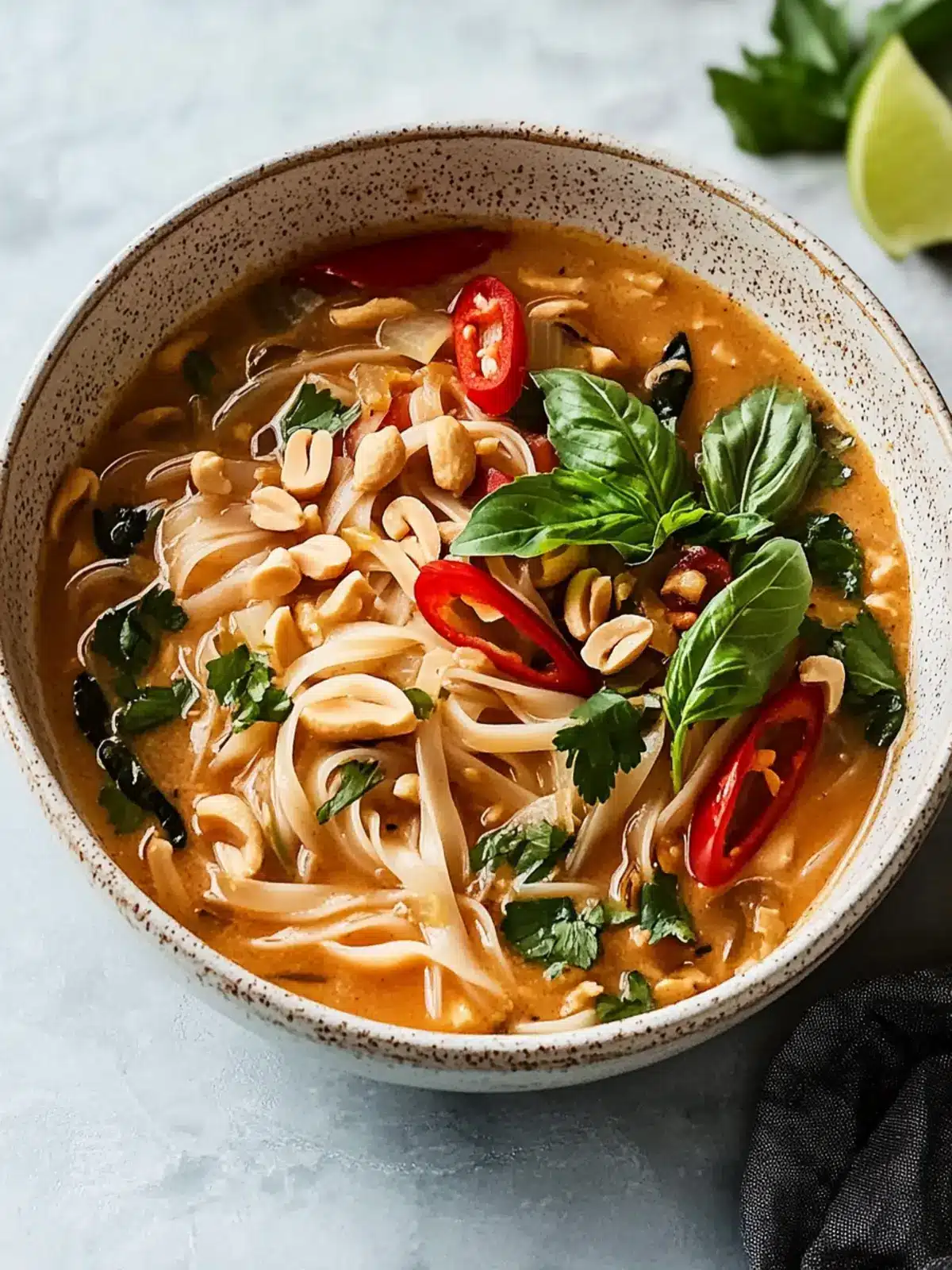
Variations & Substitutions for Thai Peanut Noodle Soup
Feel free to explore these delightful twists and swaps to customize your bowl of comfort!
- Nut-Free: Swap peanut butter with sunflower seed butter for a deliciously creamy alternative that accommodates nut allergies.
- Protein Boost: Add proteins like tofu, shredded chicken, or shrimp for extra heartiness that’ll make the soup even more satisfying.
- Vegetable Delight: Incorporate seasonal staples such as zucchini, snap peas, or bok choy for added nutrition and vibrant color.
- Coconut-Free: Replace coconut milk with creamy cashew or almond milk for a different but equally rich broth experience.
- Spice Up: Increase the heat by adding sliced jalapeños or a dash of red pepper flakes, giving your soup an exciting kick.
- Herb Swap: If cilantro isn’t your favorite, substitute with mint or green onions for a fresh pop of flavor.
- Gluten-Free Variation: Use rice noodles or zucchini noodles for a gluten-free option that still packs a comforting punch.
- Lime Lift: Try miso paste or tamarind for an umami flavor boost that enhances the soup’s complexity beyond its traditional profile.
Explore these variations to make Thai Peanut Noodle Soup truly your own!
Make Ahead Options
Preparing your Thai Peanut Noodle Soup ahead of time is a fantastic way to save precious moments during busy weeknights. You can prep all the veggies—like slicing the red bell pepper and chopping the mushrooms—up to 24 hours in advance, storing them in an airtight container in the refrigerator to keep them fresh. Additionally, you can cook the noodles, drain them, and rinse them with cold water to prevent sticking. When you’re ready to serve, simply reheat the soup on the stove, stir in the prepped noodles, and garnish with fresh cilantro and lime. This way, you’ll have a delicious meal ready to enjoy without the stress!
Storage Tips for Thai Peanut Noodle Soup
- Fridge: Store leftovers in an airtight container for up to 3 days. This keeps the flavors fresh while maintaining the creamy consistency of your Thai Peanut Noodle Soup.
- Freezer: If you have extras, the soup can be frozen for up to 2 months. To freeze, let it cool completely, then pour into freezer-safe bags, removing excess air.
- Reheating: For best results, reheat on the stove with a splash of vegetable broth to restore creaminess and moisture. Microwave can be used in a pinch; just add a little broth for moisture.
- Serving Tip: When ready to enjoy, consider adding fresh herbs or lime juice after reheating to brighten the flavors of your Thai Peanut Noodle Soup!
Expert Tips for Thai Peanut Noodle Soup
- Noodle Cook Time: Cook rice noodles separately to not overcook them, ensuring they maintain their texture when added to the hot soup.
- Taste as You Go: Adjust the amount of red Thai curry paste according to your spice preference; always taste the broth before serving to gauge heat levels.
- Coconut Milk Consistency: If you prefer a lighter soup, opt for light coconut milk, providing the same creaminess with fewer calories.
- Fresh Garnish Boost: Don’t skip on fresh herbs like cilantro or basil; they brighten the soup’s flavor and enhance the presentation.
- Nut Allergy Alternative: Substitute peanut butter with sunflower seed butter to keep the dish nut-free while still delicious.
- Leftover Love: Store any soup leftovers in an airtight container for up to three days; reheat gently to revive the creamy texture of your Thai Peanut Noodle Soup.
What to Serve with Thai Peanut Noodle Soup?
Cozy up with a complete meal that complements the vibrant, soothing flavors of this delectable soup.
-
Crispy Spring Rolls: These delicate, crunchy bites filled with fresh vegetables and herbs add a lovely texture contrast to the soup. They are an appetizer that invites delightful dipping into soy or sweet chili sauce for an extra punch.
-
Thai Salad: Light, refreshing, and tossed with a zesty lime dressing, a vibrant Thai salad brings freshness to your meal. The crisp veggies balance the richness of the soup, creating a harmonious dining experience.
-
Steamed Jasmine Rice: Serve alongside aromatic jasmine rice, inviting a wholesome feel to the meal. This neutral side complements the soup’s bold flavors while soaking up any extra broth.
-
Coconut Milk Rice Pudding: For a sweet ending, try a creamy coconut milk rice pudding. This dessert echoes the coconut notes in your main dish, making for a beautifully cohesive meal.
-
Iced Green Tea: Refreshing and subtle, iced green tea is a perfect palate cleanser. Its lightness allows the soup’s flavors to shine through without overwhelming the senses.
-
Pickled Vegetables: Add a tangy crunch with pickled vegetables like carrots and daikon. Their acidity contrasts beautifully with the creamy soup, elevating each bite and adding an exciting zing.
-
Lime Wedges: Brightly cut lime wedges are a must-have companion. A squeeze of lime over the soup before diving in enhances its flavors and adds that zesty pop.
Combining these sides and drinks with your Thai Peanut Noodle Soup creates an unforgettable dining experience, leaving you and your loved ones satisfied and eager for seconds!
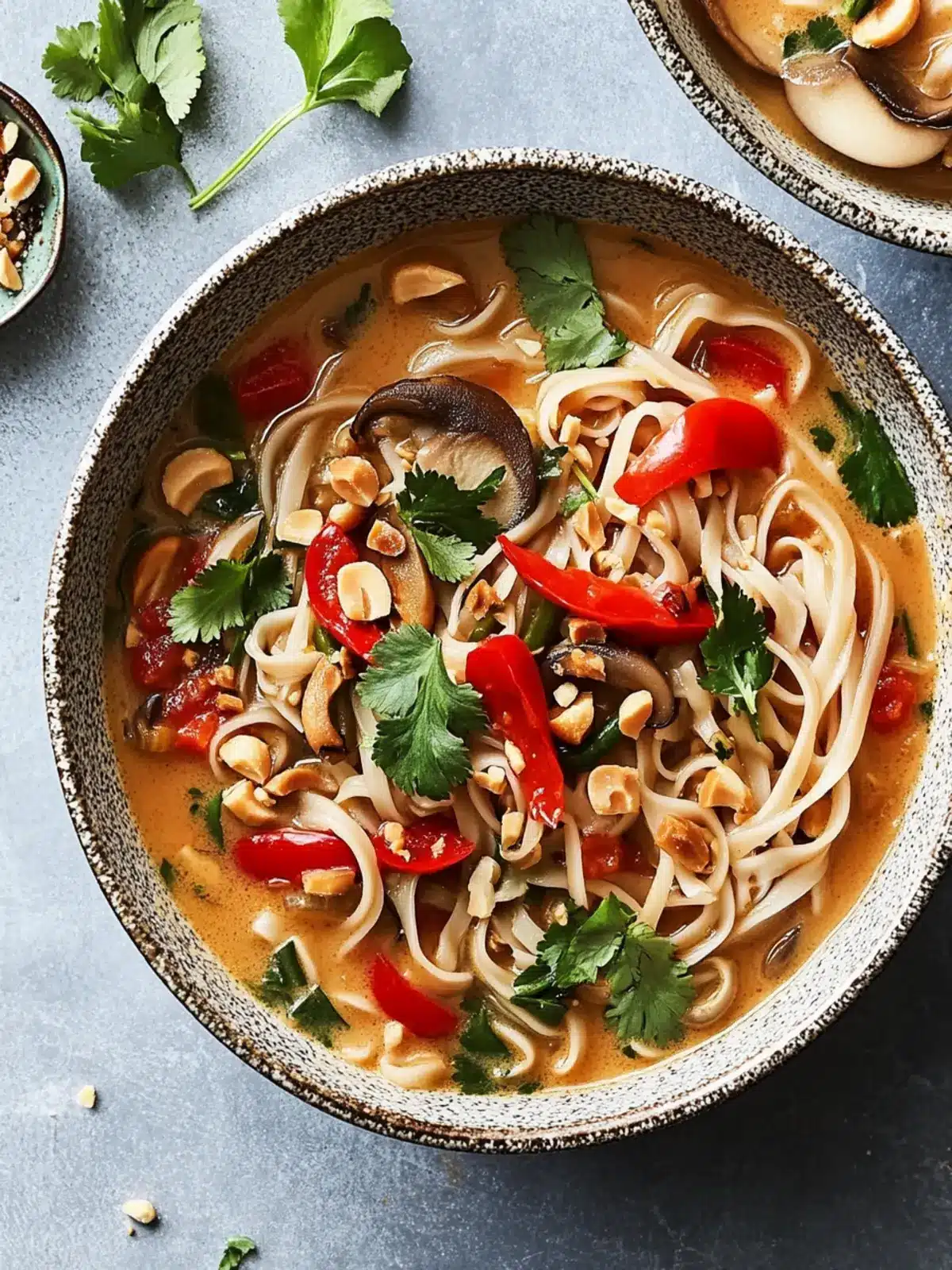
Thai Peanut Noodle Soup Recipe FAQs
What type of mushrooms should I use for the best flavor?
Cremini mushrooms are a fantastic choice as they add a rich umami flavor and a delightful texture to the Thai Peanut Noodle Soup. However, if you can’t find them, shiitake or even button mushrooms will work as great substitutes.
How long will my leftover soup stay fresh in the refrigerator?
Leftovers of your Thai Peanut Noodle Soup can be stored in an airtight container in the refrigerator for up to 3 days. For the best flavor retention, it’s crucial to keep it chilled and consume it within this timeframe to maintain its creamy consistency.
Can I freeze Thai Peanut Noodle Soup? How?
Absolutely! You can freeze your soup for up to 2 months. Before freezing, allow the soup to cool completely. Then, pour it into freezer-safe bags or containers, making sure to remove excess air to prevent freezer burn. When ready to enjoy, thaw it in the refrigerator overnight before reheating on the stove with a splash of vegetable broth to regain the creamy texture.
What should I do if my soup is too thick?
If your Thai Peanut Noodle Soup turns out thicker than desired, don’t worry! Simply add more vegetable broth or a little water while reheating it. Do this gradually until you reach your preferred consistency, stirring well to combine. Tasting while adjusting is a great way to ensure it remains flavorful!
Are there any common allergies related to the ingredients used in this recipe?
Yes, this recipe features peanut butter, which is a common allergen. If you or someone you’re serving has a nut allergy, you can substitute the peanut butter with sunflower seed butter. Additionally, check for gluten-free versions of the soy sauce (tamari is a great alternative!) to accommodate gluten-sensitive diets.
Can I add protein to this soup? What are some good options?
Absolutely! Adding protein not only enhances nutrition but also makes the meal more filling. Tofu is an excellent option for a vegan choice; simply cut it into cubes and add it to the pot towards the end of cooking. If you prefer meat, cooked chicken or shrimp can also be deliciously incorporated. Just make sure to add them in the last few minutes of cooking to ensure they’re heated through.
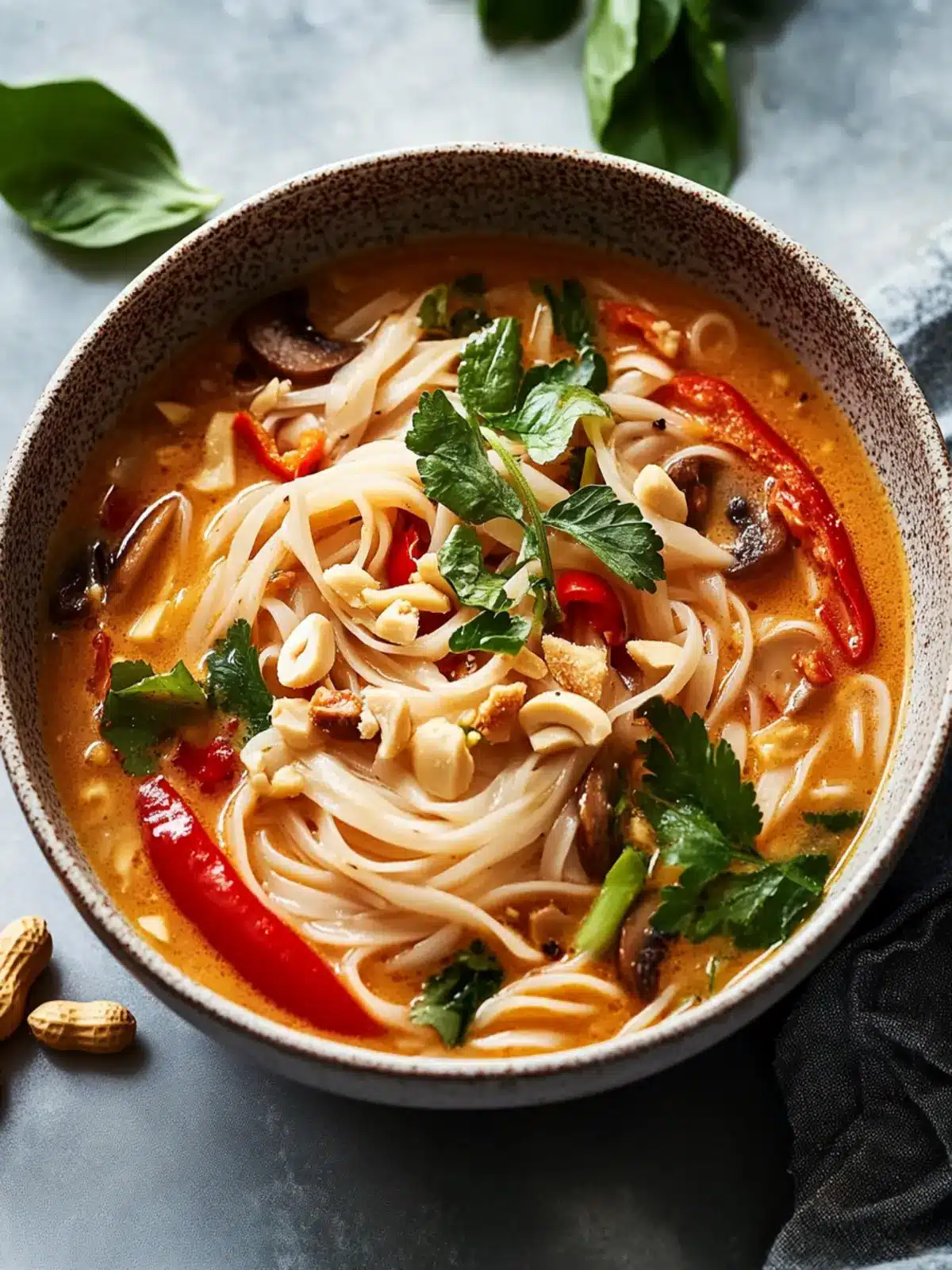
Delicious Thai Peanut Noodle Soup Ready in 30 Minutes
Ingredients
Equipment
Method
- Heat oil: Pour vegetable oil into a pot over medium heat and let it warm. Once hot, sauté cremini mushrooms with 1/4 tsp salt until they soften, for about 5 minutes, stirring occasionally.
- Add aromatics: Stir in minced garlic and freshly grated ginger, cooking for another minute until fragrant.
- Mix in spices: Add red Thai curry paste and creamy coconut milk to the pot. Stir everything together until the paste fully dissolves.
- Combine ingredients: Pour in low-sodium soy sauce, creamy peanut butter, and vegetable broth. Stir to combine and bring to a gentle simmer.
- Prepare noodles: Cook the Pad Thai rice noodles separately according to package instructions. Drain and rinse them with cold water.
- Serve: Ladle the soup into bowls, add the cooked noodles, and garnish with slices of red bell pepper, fresh herbs, lime juice, and peanuts.