
There’s nothing quite like a cozy bowl of stew to soothe your soul, especially when the weather turns chilly. Recently, I rediscovered a family favorite that has become a weeknight staple: Tuna Sundubu Jjigae. This delightful Korean soft tofu stew, traditionally rich in flavors, showcases the beauty of simplicity with a modern twist—using canned tuna!
Picture this: a bubbling pot filled with soft, silky tofu soaking in a spicy, garlicky broth, all coming together in under 30 minutes. It’s budget-friendly, easy to whip up, and crafted from pantry staples, making it perfect for those nights when fast food just won’t cut it. Whether you’re finding comfort after a long day or surprising a guest with an exotic dish, this Tuna Sundubu Jjigae is bound to impress. So, let’s dive into this warm hug in a bowl that will leave your taste buds dancing with delight!

Why is Tuna Sundubu Jjigae a Must-Try?
Quick and Easy: This recipe comes together in less than 30 minutes, making it a perfect weeknight meal.
Budget-Friendly: Utilizing canned tuna and pantry staples keeps costs low without sacrificing flavor.
Comforting Delight: Each spoonful delivers a warm, hearty experience, ideal for chilly evenings.
Versatile Options: Customize to your taste—switch up proteins or make a vegetarian version easily!
Authentic Flavor: Enjoy a beloved Korean classic right at home, with a spicy, savory broth that’s simply irresistible.
Discover more delicious options to elevate your meals with our collection of weeknight recipes!
Tuna Sundubu Jjigae Ingredients
For the Stew
• Soft Tofu – a custard-like texture that absorbs flavors beautifully; silken tofu is a great substitute if needed.
• Canned Tuna – packed with protein and a delicious oceanic twist; swap it for canned salmon or shrimp if you prefer.
• Gochugaru (Korean Red Pepper Flakes) – the heart of the spice, giving it a smoky kick; crushed red pepper flakes work if you’re in a bind.
• Fish Sauce – enriches the stew with umami depth; you can use extra soy sauce or a pinch of salt as alternatives.
• Garlic – adds aromatic richness; fresh cloves are best, but powdered garlic can be used for convenience.
• Sesame Oil – infuses nuttiness into the broth; feel free to substitute it with a neutral oil if you don’t have it on hand.
• Egg – creates a creamy poached effect in the stew; leave it out for a vegetarian option if desired.
• Scallions – offers freshness and a pop of color; leeks or chives can serve as excellent replacements.
Elevate your cooking experience with this Tuna Sundubu Jjigae, the quick and comforting dish that warms both body and soul!
How to Make Tuna Sundubu Jjigae
-
Heat Oil: In a medium saucepan, warm the sesame oil over medium heat. This will create a fragrant base for your stew.
-
Sauté Garlic: Add minced garlic and sauté for about 30 seconds until it turns golden and aromatic, filling your kitchen with mouthwatering scents.
-
Add Spice: Stir in the gochugaru and cook for another 30 seconds, allowing the spices to bloom and infuse the oil with a beautiful red hue.
-
Pour Broth: Carefully pour in vegetable or chicken broth (or water) and bring it to a gentle simmer. This step builds the rich, savory foundation of your stew.
-
Gentle Incorporation: Gently add the soft tofu and canned tuna, taking care not to break the tofu. Let them nestle into the simmering broth for a cozy embrace.
-
Simmer Together: Allow the stew to simmer for about 10 minutes, allowing the flavors to meld beautifully, deepening the comfort of your dish.
-
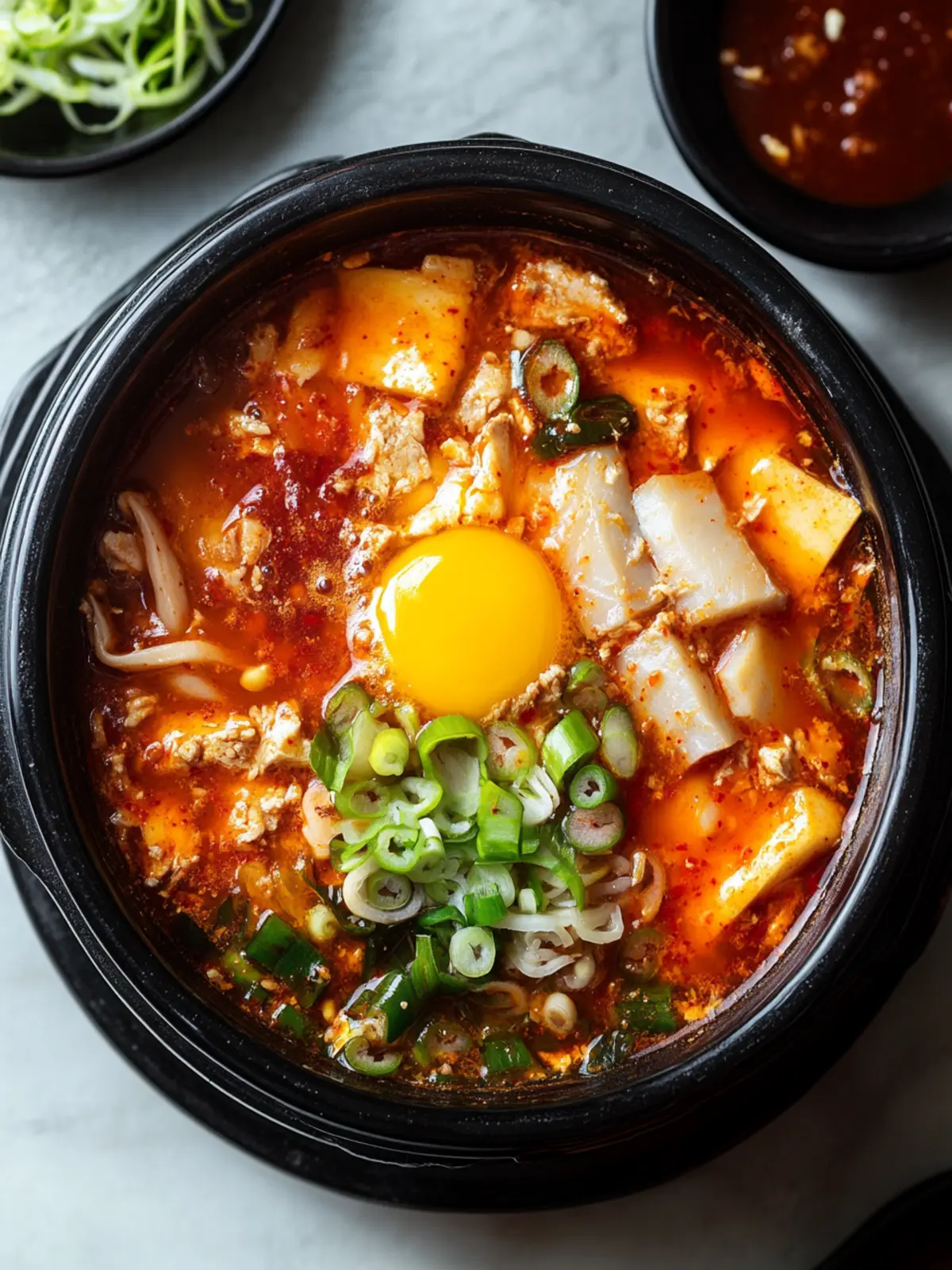
Poach Egg: Crack an egg on top carefully; let it poach for 2-3 minutes until the whites are set but the yolk remains runny, adding a creamy richness to your stew.
-
Garnish & Serve: Garnish with sliced scallions. Serve hot with a side of steamed rice and kimchi for a complete meal bursting with flavor.
Optional: Add a sprinkle of extra gochugaru on top for an extra kick!
Exact quantities are listed in the recipe card below.
Storage Tips for Tuna Sundubu Jjigae
-
Fridge: Store any leftover Tuna Sundubu Jjigae in an airtight container for up to 2 days. When reheating, avoid adding the egg until you’re ready to serve.
-
Freezer: Avoid freezing the stew as it can compromise the texture of the soft tofu, making it less enjoyable.
-
Reheating: Simply warm the stew on the stovetop over medium heat. Stir gently to combine, ensuring the tofu remains intact and the dish stays flavorful.
-
Make-Ahead: You can prepare the broth in advance and refrigerate for up to 2 days. Add tofu and tuna fresh when you’re ready to enjoy a warm bowl of comfort!
Expert Tips for Tuna Sundubu Jjigae
-
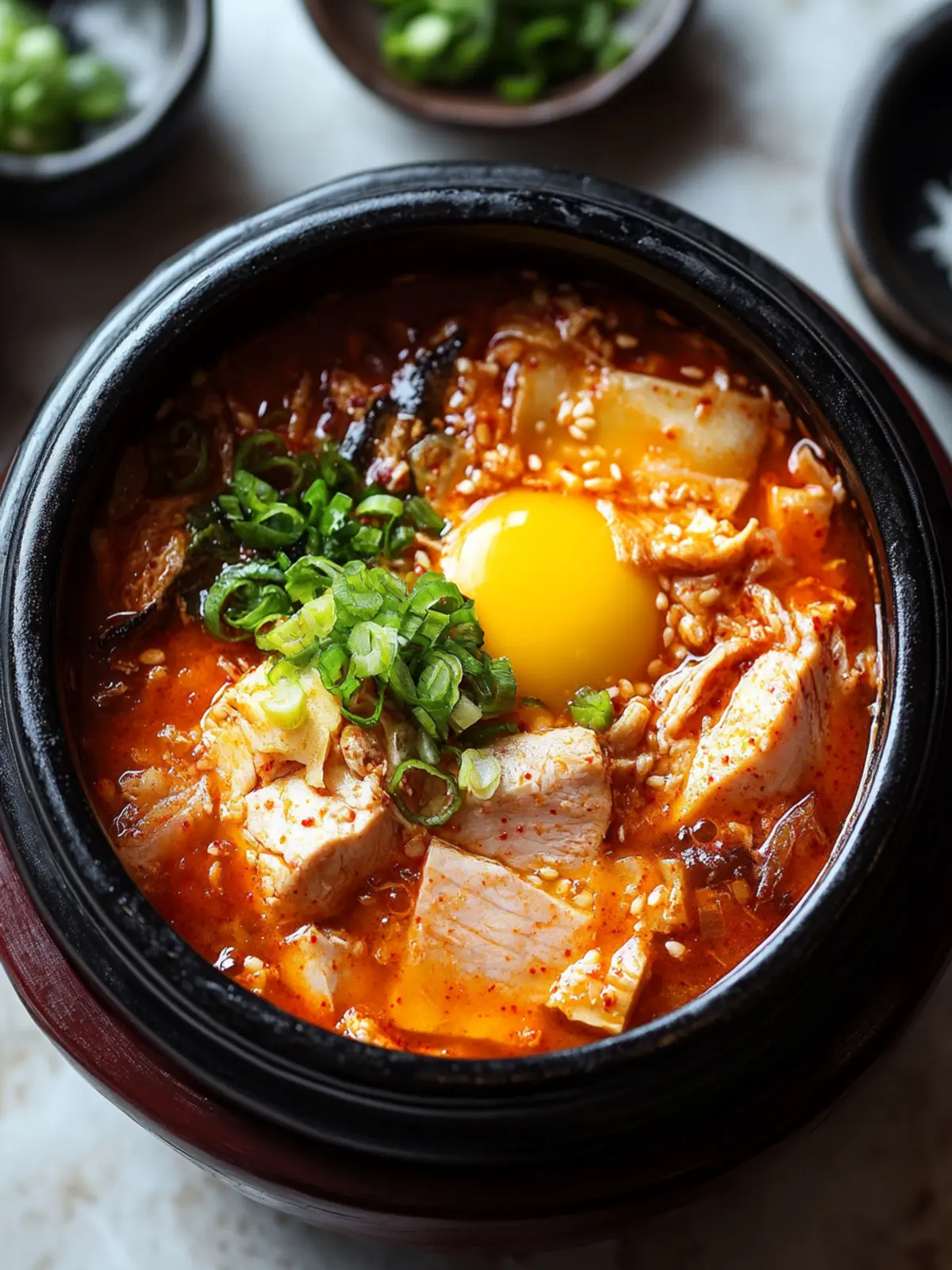
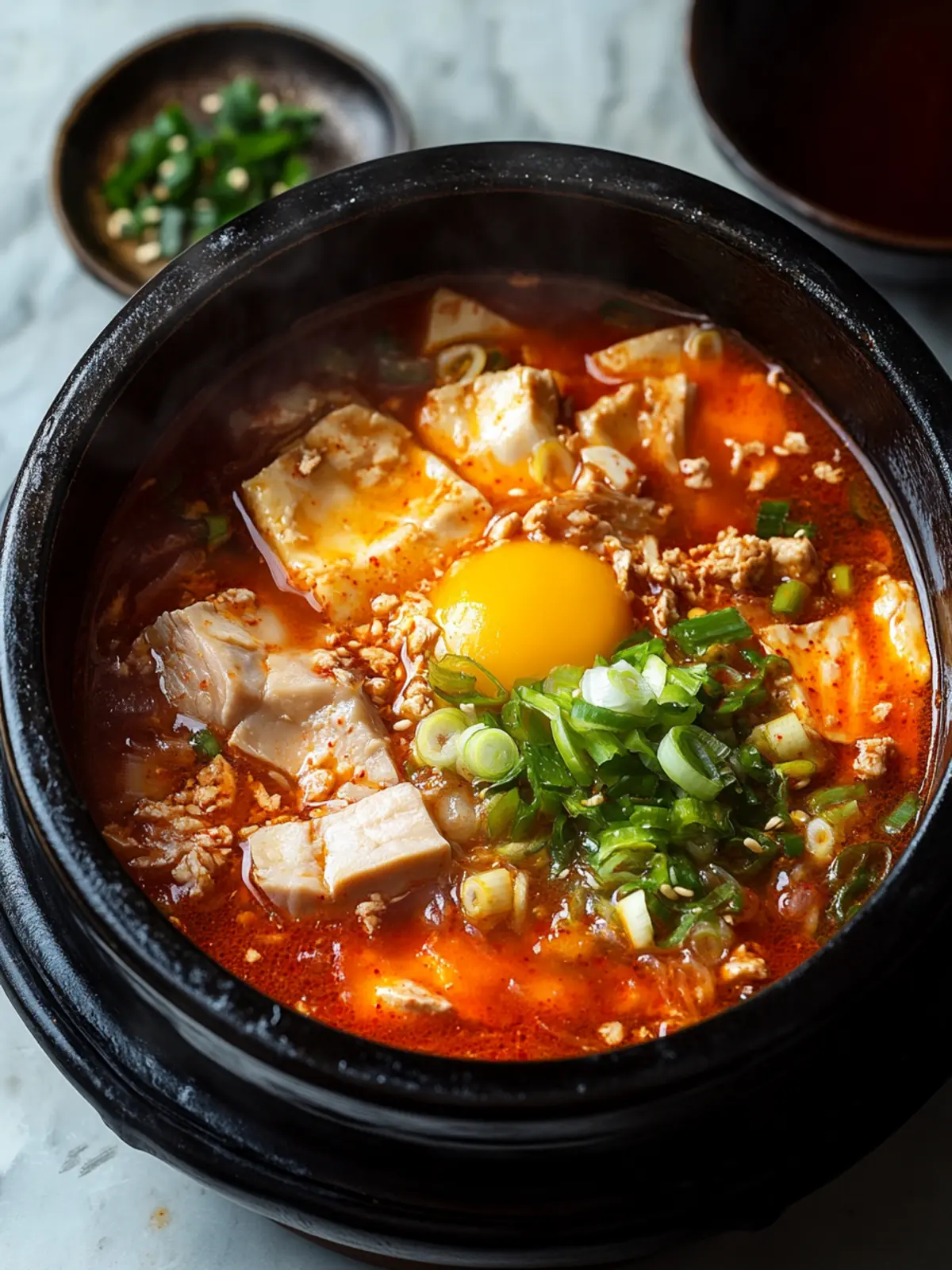
Serving Temperature: Serve the stew immediately in a hot stone pot (ttukbaegi) to keep it bubbling and warm for longer.
-
Tofu Care: Avoid breaking the tofu while adding it to the pot; gently slide it in to maintain its beautiful texture in the Tuna Sundubu Jjigae.
-
Spice Control: If you’re sensitive to heat, start with a smaller amount of gochugaru and adjust to taste as the dish simmers.
-
Flavor Deepening: Let the stew sit for a few minutes after cooking—this allows the flavors to meld and become even more delicious!
-
Vegetarian Option: For a vegetarian version, simply omit the canned tuna and fish sauce, replacing them with your favorite veggies or mushrooms for added depth.
-
Storage Tips: Refrigerate any leftovers in an airtight container, but avoid freezing as it can change the tofu’s texture in the Tuna Sundubu Jjigae.
Tuna Sundubu Jjigae Variations
Customize your Tuna Sundubu Jjigae for a delightful twist that’s uniquely yours!
-
Vegetarian Delight: Omit the tuna and fish sauce, adding hearty mushrooms and colorful bell peppers for texture and flavor.
-
Seafood Lovers: Swap canned tuna for canned salmon, shrimp, or clams, providing a fresh oceanic twist that’s equally comforting.
-
Extra Spicy: Increase the amount of gochugaru or add sliced fresh chili peppers for a fiery kick that will warm your soul.
-
Creamy Version: Stir in a splash of coconut milk for a rich, creamy texture, transforming the stew into a luscious experience.
-
Noodle Upgrade: Add cooked rice noodles or udon for a heartier meal that’s perfect for satisfying hungry bellies.
-
Savory Broth Boost: Enhance the umami with a splash of soy sauce or miso paste, deepening the flavor profile of your stew.
-
Eggy Goodness: For an extra protein boost, add more eggs, poaching a few for a delightful creamy experience in every bowl.
-
Herb Infusion: Experiment with fresh herbs like cilantro or basil as a garnish for a refreshing finish that brightens each spoonful.
What to Serve with Tuna Sundubu Jjigae?
Cozy up with a full meal that rounds out the wonderful flavors of this spicy and savory stew.
-
Steamed Short-Grain Rice: The perfect companion to soak up the rich broth, providing a satisfying base to each bite.
-
Kimchi: This classic side dish adds a delightful crunch and tangy kick that complements the stew’s flavors beautifully.
-
Pickled Radishes: Sweet and tangy, these bright bites add a refreshing contrast, enhancing the overall dining experience.
-
Banchan: A variety of Korean side dishes like seasoned spinach or marinated bean sprouts can provide extra flavors and textures.
-
Lettuce Wraps: Serve the stew in crunchy lettuce leaves for a fun and fresh way to enjoy each spoonful.
-
Soojaebi: Korean dumplings made from dough can add extra heartiness, perfectly pairing with the silky tofu and tuna.
-
Green Tea: A warm cup of light green tea helps cleanse the palate, bringing balance after each spicy bite.
-
Fruity Desserts: End your meal with a light, fruity dessert like melon or Asian pears for a sweet finish.
Make Ahead Options
These Tuna Sundubu Jjigae preparations are perfect for busy home cooks looking to save time on weeknights! You can prepare the broth and sauté the garlic, spices, and broth combination up to 3 days in advance. Simply refrigerate this mixture in an airtight container. When you’re ready to enjoy your stew, reheat the broth on the stove and gently add the soft tofu and canned tuna to warm through. Finally, crack your egg on top for a poached delight just before serving. This method ensures your Tuna Sundubu Jjigae retains its comforting flavors and textures, providing you with a delicious meal in a flash!
Tuna Sundubu Jjigae Recipe FAQs
What type of tofu is best for Tuna Sundubu Jjigae?
Absolutely! Soft tofu is preferred for its custard-like texture, allowing it to absorb the delicious flavors of the broth. If you can’t find it, silken tofu is a great alternative that will still provide a lovely melt-in-your-mouth experience.
How should I store leftover Tuna Sundubu Jjigae?
After enjoying your Tuna Sundubu Jjigae, store leftovers in an airtight container in the fridge for up to 2 days. When reheating, remember to hold off on adding any egg until you’re ready to serve for the best experience!
Can I freeze Tuna Sundubu Jjigae?
I recommend avoiding freezing Tuna Sundubu Jjigae. The soft tofu will lose its delicate texture when thawed, turning your comforting stew into a less enjoyable dish. Enjoy it fresh to savor every delightful bite!
How can I adjust the spice level in Tuna Sundubu Jjigae?
Very! If you or your guests are sensitive to spice, I suggest starting with half the amount of gochugaru and tasting as you go. You can always add more as the dish simmers to reach your desired heat, ensuring everyone can enjoy the wonderful flavors without being overwhelmed.
Are there any dietary considerations for Tuna Sundubu Jjigae?
Of course! For those with seafood allergies, feel free to substitute canned tuna with canned chickpeas or any preferred protein. Additionally, you can omit the fish sauce and use extra soy sauce or a pinch of salt to maintain umami depth while crafting a vegetarian version.
How can I make Tuna Sundubu Jjigae ahead of time?
Preparing the broth in advance is a fantastic idea! You can make the base and refrigerate it for up to 2 days. When you’re ready for a bowl of comfort, simply add in the soft tofu and canned tuna fresh, letting the flavors meld beautifully as they cook together!
Tuna Sundubu Jjigae: Quick Comfort Food for Chilly Days
Ingredients
Equipment
Method
- In a medium saucepan, warm the sesame oil over medium heat.
- Add minced garlic and sauté for about 30 seconds until it turns golden and aromatic.
- Stir in the gochugaru and cook for another 30 seconds.
- Carefully pour in vegetable or chicken broth (or water) and bring it to a gentle simmer.
- Gently add the soft tofu and canned tuna, taking care not to break the tofu.
- Allow the stew to simmer for about 10 minutes.
- Crack an egg on top carefully; let it poach for 2-3 minutes until the whites are set.
- Garnish with sliced scallions and serve hot with steamed rice and kimchi.