
As the first hints of spring approach and the chill of winter lingers in the air, there’s nothing quite like a warm bowl of Irish Beef Stew to wrap you in a cozy embrace. This dish, imbued with the rich, malty flavor of Guinness stout, has a way of turning a simple dinner into a celebration. I discovered this enchanting recipe after a long week of fast food and takeout, and its hearty combination of tender beef, colorful vegetables, and creamy potatoes has since become a comforting staple in my kitchen.
Just picture the sizzle of beef browning in the pot, its savory aroma mingling with fragrant herbs and garlic. Each spoonful feels like a loving hug on a chilly evening, perfect for everything from a family dinner to festive gatherings on St. Patrick’s Day. Join me as we embark on this culinary journey that promises not only to satisfy your hunger but also to fill your home with warmth and joy. Let’s dive into a classic that transforms the everyday into something extraordinary!

Why is Irish Beef Stew a Must-Try?
Hearty Comfort: This Irish Beef Stew encapsulates the essence of comfort food, warming you from the inside out with every bite.
Rich Flavors: The deep, malty notes of Guinness meld brilliantly with tender beef and vibrant vegetables, creating an unforgettable taste sensation.
Simple Steps: With easy-to-follow instructions, even novice cooks can whip up a culinary masterpiece that impresses.
Versatile Options: Feel free to mix it up by substituting proteins or adding seasonal veggies, making it a flexible dish for any occasion.
Crowd-Pleaser: Perfect for gatherings, this stew brings everyone to the table for cozy conversations and memorable moments.
Dive into this comfort food classic that brings a touch of Ireland to your home! Explore more ideas on how to serve it with some delicious sourdough bread for a complete meal.
Irish Beef Stew Ingredients
For the Stew
• Extra-virgin olive oil – Provides fat for sautéing; substitute with vegetable oil if desired.
• Beef chuck stew meat – Adds rich flavor and tenderness; avoid lean cuts for the best results.
• Kosher salt – Enhances flavor and helps retain moisture; coarse sea salt is a great alternative.
• Freshly ground black pepper – Adds seasoning; freshly ground is preferable for depth.
• Yellow onion – Brings sweetness and aroma; white onion can be used as a substitute.
• Medium carrots – Contributes sweetness and vibrant color; try parsnips for a different taste.
• Celery ribs – Adds subtle savory flavor; fennel can be used instead for a unique twist.
• Garlic cloves – Increases flavor intensity; garlic powder is a handy alternative.
• Medium russet potatoes – Provides heartiness and absorbs flavors; yellow potatoes offer creaminess.
• Low-sodium beef broth – Acts as the cooking liquid; homemade stock elevates flavor.
• Guinness stout (11.2 oz) – Imparts a rich flavor; any stout can be used, but results may vary.
• Fresh thyme – Adds herbal brightness; dried thyme can be substituted in smaller amounts.
• Finely chopped fresh parsley – For garnishing, adding a splash of color and fresh taste.
This Irish Beef Stew is a truly comforting dish that delivers warmth and satisfaction in every bowl!
How to Make Irish Beef Stew
-
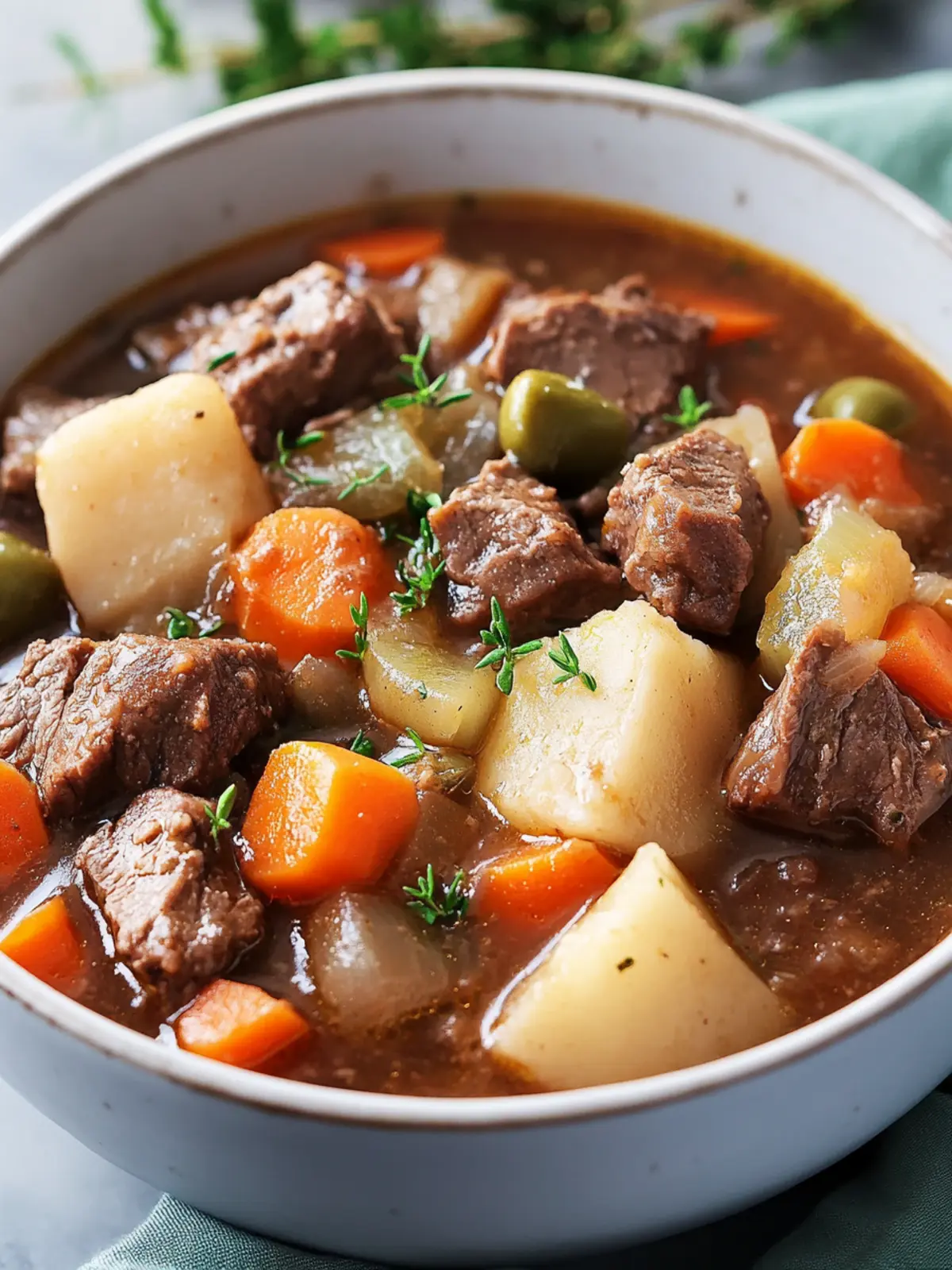
Season and Sear Beef: Generously season cubed beef chuck with salt and pepper. Heat olive oil in a Dutch oven and sear the beef until browned on all sides, about 10 minutes. Repeat in batches to avoid overcrowding, which ensures a nice crust on the meat.
-
Sauté Aromatics: Add the remaining oil, then toss in the onions, carrots, and celery. Cook until softened, around 5 minutes. Stir in the minced garlic, and cook for an additional minute to release its fragrant aroma.
-
Combine Ingredients: Return the browned beef to the pot, adding the chopped potatoes, beef broth, Guinness stout, and fresh thyme. Scrape up any browned bits from the bottom; these add flavor. Season to taste, then bring to a gentle boil.
-
Simmer: Reduce the heat to maintain a low, gentle simmer. Cover and cook until the beef and potatoes are tender, about 30 minutes. You’ll know it’s done when the beef is fork-tender and the vegetables are soft.
-
Garnish and Serve: Adjust your final seasoning and serve the stew hot, with a sprinkle of fresh parsley for a pop of color and herbal brightness.
Optional: Serve with crusty sourdough bread for a heartier meal.
Exact quantities are listed in the recipe card below.
Make Ahead Options
These hearty Irish Beef Stew components are perfect for meal prep enthusiasts! You can chop vegetables and season the beef up to 24 hours in advance—just store them separately in airtight containers in the refrigerator to maintain their freshness. The seasoning will help the beef absorb flavor and the vegetables will stay crisp. If you prefer, you can also prepare the entire stew base (without the potatoes) up to 3 days ahead of time; simply refrigerate and reheat gently before adding in your cubed potatoes and continuing to simmer. When ready to serve, heat the stew on the stove until warmed through, then enjoy an effortlessly delicious dish that feels just as comforting as when freshly made!
What to Serve with Irish Beef Stew?
Add a touch of warmth and comfort to your dining experience with these delightful pairings that complement every hearty bite.
-
Crusty Sourdough Bread: Perfect for soaking up the rich, flavorful broth of the stew, this bread adds a satisfying texture to each bite.
-
Creamy Mashed Potatoes: Velvety and buttery, these potatoes offer a creamy contrast to the stew’s robust flavors, making each mouthful a revelation.
-
Garlic Bread: The toasty crunch and aromatic garlic elevate the entire meal, providing a delightful side that enhances the stew’s warm essence.
-
Honey-Glazed Carrots: Their sweet and tender profile adds a lovely sweetness to balance the savory notes of the beef stew.
-
Fresh Green Salad: A crisp salad with a tangy vinaigrette brings freshness and a lightness to the meal, perfectly counteracting the richness of the stew.
-
Dark Chocolate Stout Brownies: For dessert, these fudgy brownies echo the stout used in the stew, making for a deliciously themed finish to your meal.
Imagine each of these dishes coming together to create a feast that feels like a warm hug on a chilly day!
Storage Tips for Irish Beef Stew
Fridge: Store leftovers in an airtight container for up to 4 days. Make sure the stew has cooled to room temperature before refrigerating to retain its flavor.
Freezer: Freeze your Irish Beef Stew in a freezer-safe container for up to 1 month. Be cautious, as the texture of potatoes may change upon reheating after freezing.
Reheating: When ready to enjoy, thaw overnight in the fridge. Reheat on the stovetop over low heat, stirring gently until warmed through. Add a splash of broth if needed to maintain consistency.
General Note: Always taste and adjust seasoning after reheating, as flavors may mellow during storage.
Expert Tips for Irish Beef Stew
-
Sear Properly: Ensure the beef is browned well before simmering. This step caramelizes the meat, enhancing the deep flavors of your Irish Beef Stew.
-
Don’t Skimp on Time: Allow the stew to simmer gently. A longer cooking time helps meld the flavors and tenderizes the beef, creating a perfect comfort food experience.
-
Adjusting Bitterness: If the flavor from the Guinness stout is too strong, let the stew rest off the heat after cooking to mellow and balance the flavors.
-
Thicker Stew Option: For those who prefer a thicker consistency, mix cornstarch with a little cold water and stir it into the stew during the last few minutes of cooking.
-
Extra Veggies: Feel free to incorporate seasonal vegetables like peas or green beans to elevate flavors and add color to your Irish Beef Stew.
Irish Beef Stew Variations
Feel free to unleash your creativity with these delightful twists that can elevate your Irish Beef Stew experience!
-
Lamb: Substitute beef chuck with lamb for a more traditional and earthy flavor profile that honors Irish culinary roots. The essence of lamb complements the stew beautifully.
-
Sweet Potatoes: Swap out russet potatoes for sweet potatoes to add a hint of natural sweetness and a lovely pop of color. This variation is also perfect for those who crave a different texture.
-
Add Greens: Toss in fresh peas or green beans in the last few minutes of cooking for a burst of vibrant color and an extra layer of nutrition. It’s a perfect way to sneak in some fresh veggies!
-
Spicy Kick: For those who like it hot, add a pinch of red pepper flakes or diced jalapeños. This fiery twist transforms your comforting stew into a warming dish that stirs the senses.
-
Mushroom Medley: Add sliced mushrooms for an umami twist. Their rich flavor and meaty texture meld beautifully with the stew, making each spoonful a delight for mushroom lovers.
-
Gluten-Free: Use gluten-free stout and ensure your broth is gluten-free for a hearty stew that caters to dietary needs without sacrificing flavor.
-
Herb Variations: Experiment with different herbs like rosemary or oregano in place of thyme. Each herb brings its own unique essence, adding distinctive layers of flavor to the dish.
-
Beer Alternatives: If Guinness stout isn’t available, any dark beer, such as a porter or brown ale, can work beautifully and bring its own twist to the traditional flavor.
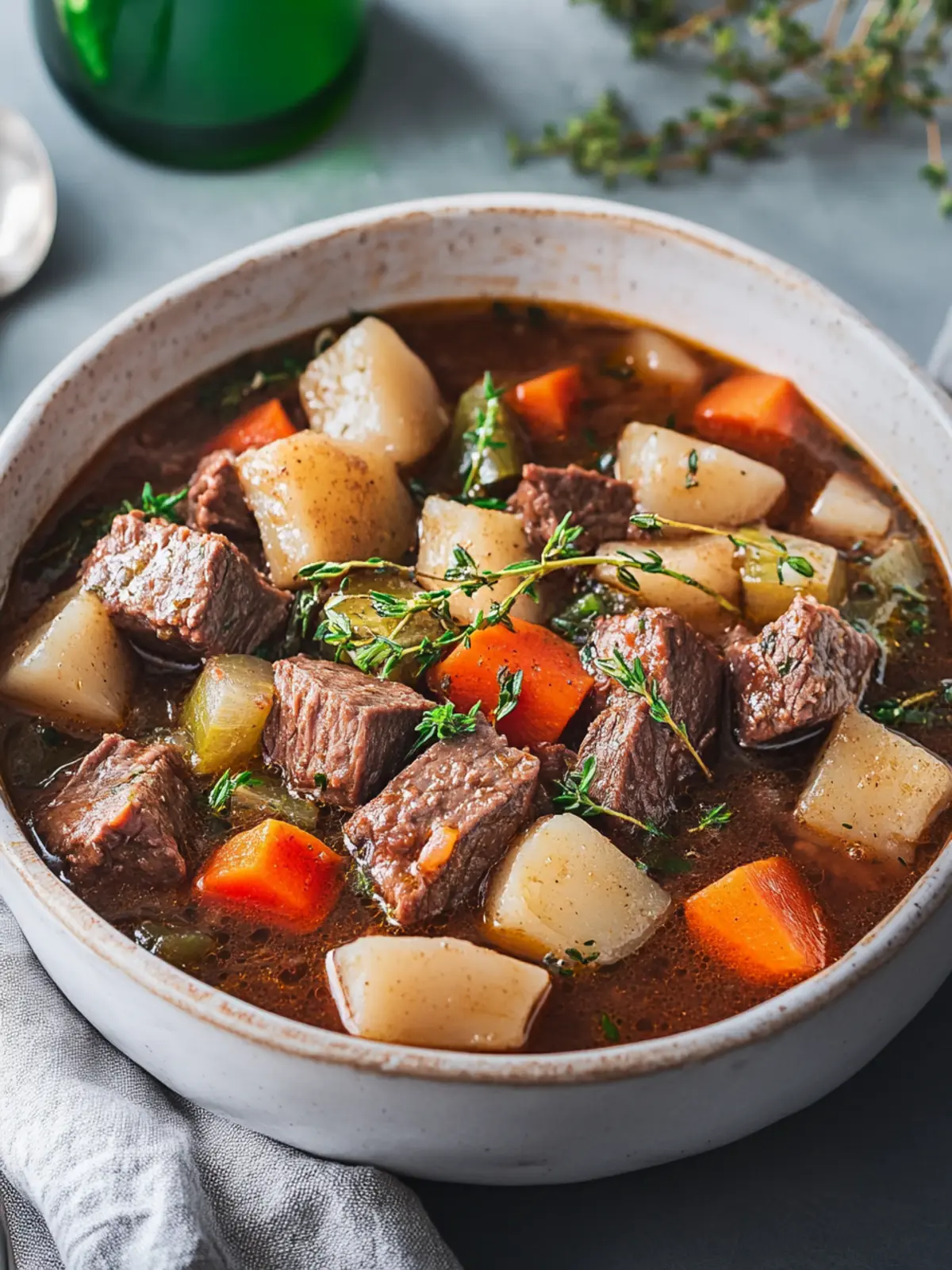
Let your tastebuds guide you through these variations, and make this Irish Beef Stew your own!
Irish Beef Stew Recipe FAQs
What type of beef is best for Irish Beef Stew?
Choosing the right cut is essential! I recommend using beef chuck stew meat for its rich flavor and tenderness when cooked low and slow. Avoid lean cuts like sirloin or tenderloin, as they won’t provide the same juicy texture.
How do I store leftovers of Irish Beef Stew?
Absolutely! Store any leftovers in an airtight container in the refrigerator for up to 4 days. Make sure the stew has cooled completely before sealing it. This helps preserve the flavors and prevents spoilage.
Can I freeze Irish Beef Stew?
Yes, you can freeze it! For the best results, let the stew cool completely before pouring it into a freezer-safe container. Freeze for up to 1 month. Keep in mind that the texture of the potatoes might change after reheating. To enjoy later, thaw overnight in the fridge and reheat on the stovetop over low heat.
Why does my stew taste bitter?
If your stew has a bitterness from the Guinness stout, don’t worry! Let it sit off the heat for about 15–20 minutes after cooking. This helps mellow the strong flavors, making the stew more balanced. If you prefer a milder taste, consider using a less robust stout or reducing the amount slightly next time.
Are there any dietary considerations for Irish Beef Stew?
Certainly! If you’re cooking for someone with dietary restrictions, you can substitute the beef with lamb or even a plant-based protein. For gluten sensitivities, opt for gluten-free beer instead of Guinness. Always check labels for hidden allergens, and feel free to use fresh herbs instead of pre-packed mixes if allergies are a concern.
How can I thicken my Irish Beef Stew?
If you prefer a thicker consistency, you can use a cornstarch slurry. Simply mix 1 tablespoon of cornstarch with 2 tablespoons of cold water. Stir this mixture into the stew during the last 10 minutes of cooking and stir gently until the stew thickens. This offers a wonderful, hearty texture that enhances every bite!
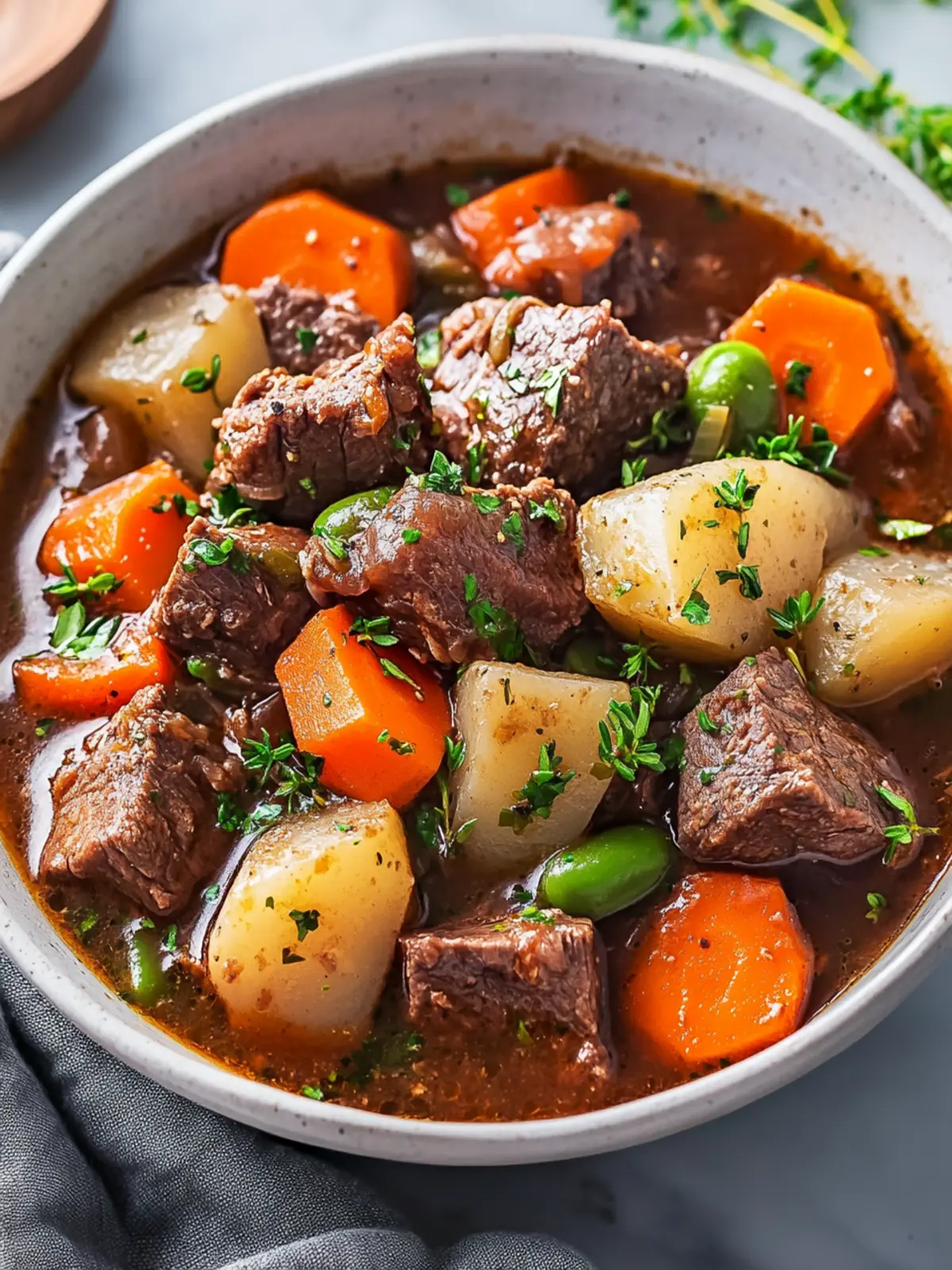
Warm Up with Authentic Irish Beef Stew Packed with Flavor
Ingredients
Equipment
Method
- Generously season cubed beef chuck with salt and pepper. Heat olive oil in a Dutch oven and sear the beef until browned on all sides, about 10 minutes. Repeat in batches to avoid overcrowding.
- Add the remaining oil, then toss in the onions, carrots, and celery. Cook until softened, around 5 minutes. Stir in the minced garlic, and cook for an additional minute.
- Return the browned beef to the pot, adding the chopped potatoes, beef broth, Guinness stout, and fresh thyme. Scrape up any browned bits from the bottom; these add flavor. Season to taste, then bring to a gentle boil.
- Reduce the heat to maintain a low, gentle simmer. Cover and cook until the beef and potatoes are tender, about 30 minutes.
- Adjust your final seasoning and serve the stew hot, with a sprinkle of fresh parsley for a pop of color.